
 05/18/2026
 BUILDLAB
 6 min read
The Fort Worth $2.6M Exit Case Study: What Affordable Housing Operators Can Learn
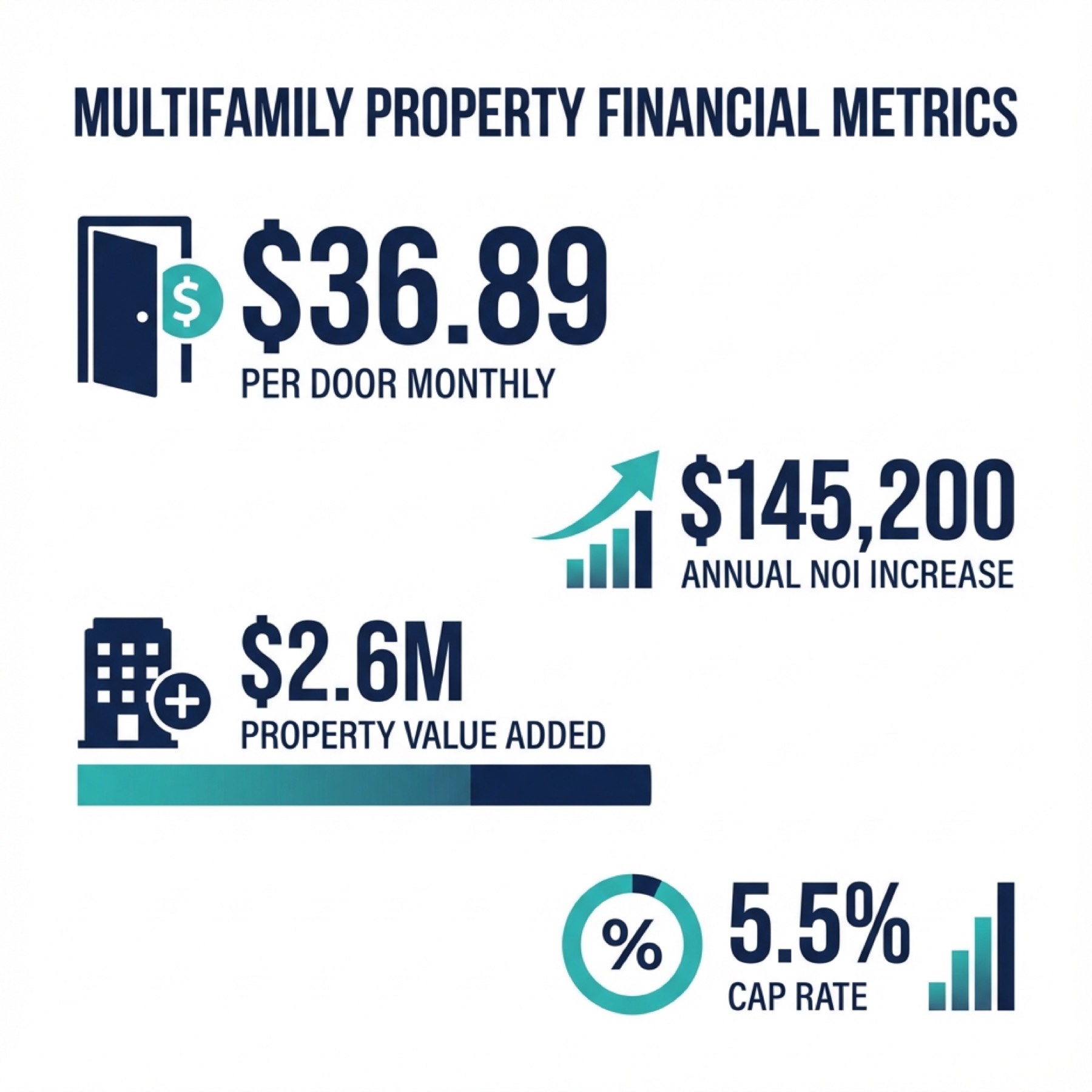
A 328-unit Fort Worth property added $2.6M at exit and $145K+ in annual ancillary revenue through property-wide WiFi. What the design decisions look like — and why they map to affordable housing.
Industry coverage of the Sentinel Peak Capital Partners exit of The Haven at Chisholm Trail — a 328-unit Fort Worth property acquired by Valiant — has been making the rounds for good reason. The reported numbers: $2.6M in incremental property value at exit and $145K+ in proven annual ancillary revenue, attributed to a property-wide fiber-backed WiFi investment.
It is a market-rate transaction, but affordable housing operators should be paying attention. The mechanism behind those numbers is portable.
What the operator actually did
Public reporting describes a capital investment in enterprise-grade fiber infrastructure during the hold period, paired with property-wide WiFi delivered as an amenity and an ISP revenue model. The headline outcomes — added valuation at exit, ancillary income — are the visible result. The structural decisions sit underneath.
- In-building fiber path to every unit, sized for 10+ years of upgrades.
- Common-area WiFi 6 coverage strong enough to be a leasing amenity, not an afterthought.
- Carrier and ISP relationships negotiated to capture, not surrender, ancillary revenue.
- Operational visibility (uptime monitoring, resident-facing support) good enough that the owner could prove the income line.
Why this maps to affordable housing
Affordable housing operators run longer holds, not 3–5 year flips. That actually makes the math more compelling, not less. The infrastructure pays back for the entire 30+ year compliance period, plus whatever scattered ancillary revenue can be captured under rent-restriction rules. The Fort Worth example shows what a 3-year hold can do; an affordable housing 30-year hold compounds those same fundamentals.
The constraints are different
Affordable housing cannot fold $30/door into a mandatory rent increase. What it can do is: capture ISP door fees and profit share, offset the infrastructure cost with the CASF grant (when eligible), and score TCAC broadband points on the same scope. Different revenue mechanism, same underlying asset.
The pattern that does not transfer
Pricing power. A market-rate Fort Worth Class B can convert WiFi into rent premium. Affordable housing has to find the value somewhere else. Operators who treat WiFi as a check-the-box amenity in affordable housing typically miss this — they design it like market-rate without the revenue model and end up with the cost without the lift.