 08/02/2026
 BUILDLAB
 7 min read
Apartments With EV Charging: What Renters Are Searching For, and What It Is Worth to Leasing
Renters are actively searching for "apartments with EV charging" before they ever tour a unit. Here's what it takes to turn that demand into a real amenity fee and faster lease-up — not just a compliance checkbox.
Renters increasingly treat EV charging as a search filter when apartment-hunting — not a feature they discover once they've already toured a unit, but a qualifier some prospects screen for before they ever call the leasing office. "Apartments with EV charging" and close variants have become common, direct search phrasing, the same way "in-unit laundry" or "covered parking" became standard filters once enough of the market started expecting them.
BuildLab has already written about what California's 2026 EV charging code actually requires developers to build, and what the retrofit playbook looks like for existing multifamily parking. Both of those are compliance questions — what the state makes you install, and how to do it without an avoidable service upgrade. This is a different question. Once the chargers exist, required or not, what turns them from a line item on the electrical drawings into something a leasing team can point to, price, and put in the listing? That's a revenue and lease-up question, not a code question, and it has a real answer.
Why This Behavior Change Matters for Leasing
This isn't a niche EV-owner concern anymore. As EV adoption keeps climbing and more renters either own one or are actively cross-shopping one, "does this property have charging" moves from an afterthought to a pre-qualifying question — asked before a tour is scheduled, the same way parking availability or a pet policy gets asked upfront. A property that can't answer that question with a confident yes loses some share of prospects before a leasing agent ever gets the chance to make the case for the unit itself.
That's the same pattern BuildLab has tracked around property-wide WiFi: infrastructure that used to be a footnote on the amenity page becomes something renters actively screen for before they ever call the leasing office or fill out a tour request.
EV Charging Runs the Same Amenity-Revenue Playbook as WiFi
BuildLab has written about how property-wide WiFi turned from a cost center into a standalone $30–50 per door per month income line, and separately ranked the ten amenities that actually generate ancillary revenue instead of just photographing well for a brochure. EV charging landed at #2 on that list — premium parking fees plus per-kWh revenue — for the same underlying reason WiFi landed at #1: it pairs a fee an owner can legitimately charge with renter demand that shows up in search data, not just in a survey. Most amenities have one of those two things. EV charging, designed correctly, has both.
What EV Charging Is Actually Worth to a Leasing Team
The revenue mechanics are straightforward once the infrastructure actually supports them. A reserved or guaranteed-access charging space commands a premium over standard parking — typically in the $50–150 per month range — plus metered per-kWh revenue on the electricity delivered through the charger. Layer the leasing side on top: renter search behavior increasingly screens for this before they tour, so a property that can credibly advertise real EV charging starts that conversation ahead of a comparable property that can't.
- Premium fee for a reserved or guaranteed-access charging space, priced like preferred parking with a technology premium layered on.
- Metered per-kWh revenue on power delivered through the charger — this requires networked, submetered equipment, not a shared circuit and an honor system.
- Measurable lease-up and renewal lift among EV-owning renters, a segment that skews toward higher income and longer average tenure.
- A listing that can legitimately use the exact phrases renters are already searching — functioning as free organic lead flow, not just an amenity bullet.
There's also a halo effect worth pricing in that doesn't show up on the fee schedule. A renter who doesn't own an EV yet still reads a property with real, visible EV charging as newer, better-maintained, and more attentive to what tenants will want next — the same signal reliable WiFi sends to a renter who barely streams video. On a tour, a charging row functions a bit like a fitness center: most residents won't use it every week, but its presence changes how the whole property gets judged. That's hard to price line by line, but it shows up in the same lease-up velocity a leasing team can already measure.
Enough Stations to Read as an Amenity, Not a Compliance Plaque
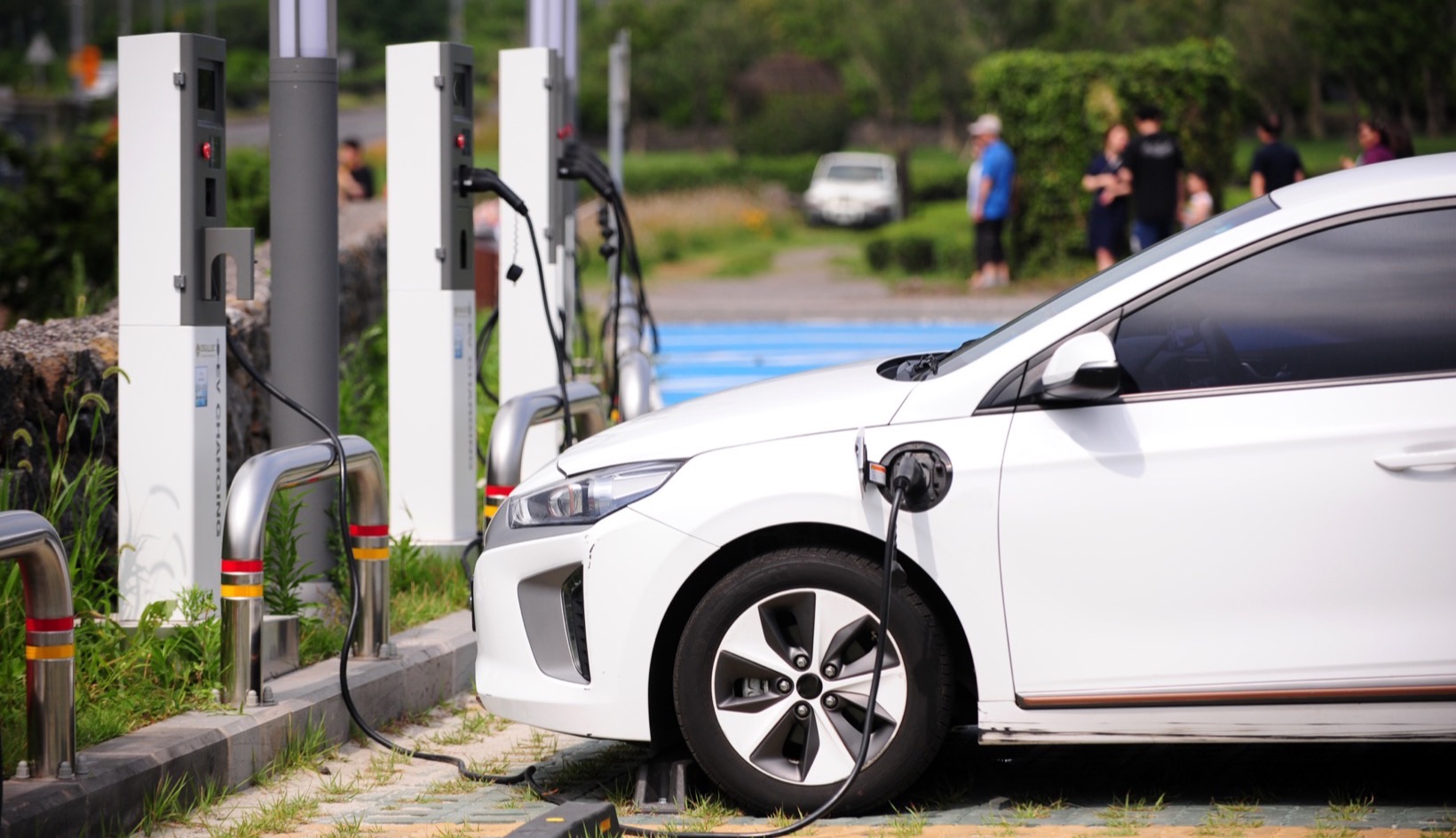
Two Level 2 chargers bolted to the wall of a 150-unit garage do not read as an amenity to a renter who found the listing by searching "apartments with ev charging." They read as the minimum the developer could get away with. A renter who tours expecting a real amenity and finds a waitlist for two spaces remembers that at lease-signing — and mentions it in the review. The number that functions as an amenity is the one where a resident can reasonably expect to get a spot when they need one, not petition the property manager for access.
- Size the charging count to a share of parking a resident actually encounters open, not a token allocation sized to clear plan check and nothing more.
- Plan for growth in place. EV adoption in a 150-unit building looks different in year five than at lease-up; oversizing conduit and panel capacity during construction is cheap, adding it later is not.
- Treat visitor and guest charging as part of the amenity story too — it's a detail renters notice on a tour and repeat in online reviews.
Reliable, Networked, and Metered — Not Just Wired
None of the revenue above works on a charger that's simply wired to a panel. A station has to be networked to bill per-kWh, report uptime, and manage reservation or access — which makes this a low-voltage and connectivity scope as much as an electrical one. It's the same principle BuildLab applies to property-wide WiFi and door access: the amenity is only as good as the network path underneath it, and that path has to be planned alongside the electrical scope, not bolted on after.
The failure mode is predictable and avoidable. An unmonitored charger goes down, nobody at the property knows until a resident complains, and the amenity that was supposed to be a leasing advantage becomes a service ticket and a one-star review instead. Networked, metered EVSE reports its own status — that's the difference between an amenity a leasing team can stand behind on a tour and one they're quietly hoping nobody tests on move-in day.
Design the EV Amenity So It Actually Pays Back
What Changes for Affordable and Rent-Restricted Properties
Most of the mechanics above still apply in rent-restricted housing, with real constraints. A LIHTC or other rent-restricted property generally can't fold a $75 premium parking fee into what a resident pays the way a market-rate building can. What does carry through: the renter search demand doesn't disqualify affordable housing from benefiting — units still need to lease up, and prospective residents searching these same terms don't filter by income restriction before they search. The revenue mechanics get narrower, but the design decisions — station count, network path, metering — are identical, and skipping them costs the same either way.
- Metering still matters even without a resident-facing fee — it's how a property tracks utility cost allocation and proves the amenity is functioning, not just installed.
- Lease-up velocity and resident satisfaction are real value even where a per-space premium fee isn't, and both show up in the same search-driven prospect pool.
Marketing It Where Renters Are Already Looking
The search terms renters use aren't a mystery — "EV charging," "electric vehicle charging," and close variants, plus city-specific and long-tail phrasing of the same intent. A listing that says "EV charging available" undersells a property with real networked, metered Level 2 charging and a meaningful allocation of spaces. Naming the amenity the way renters actually search for it — reserved EV charging, networked EV charging stations, metered EV charging included — puts the listing in front of exactly the prospects who decided this mattered before they opened a single floor plan.
The fee and the lease-up lift both trace back to the same upstream decision: whether the charging infrastructure was designed to be marketed, metered, and relied on — or installed to satisfy an inspector and left alone. That decision gets made once, during design, and it's expensive to unwind after the concrete is poured and the panel is sized.