
 04/22/2026
 BUILDLAB
 4 min read
What Is the TCAC Broadband Score and Why Your LIHTC Application Depends on It
The Tax Credit Allocation Committee broadband score is one of the easiest ways to lose — or win — points on your 9% LIHTC application. Here is how it works.
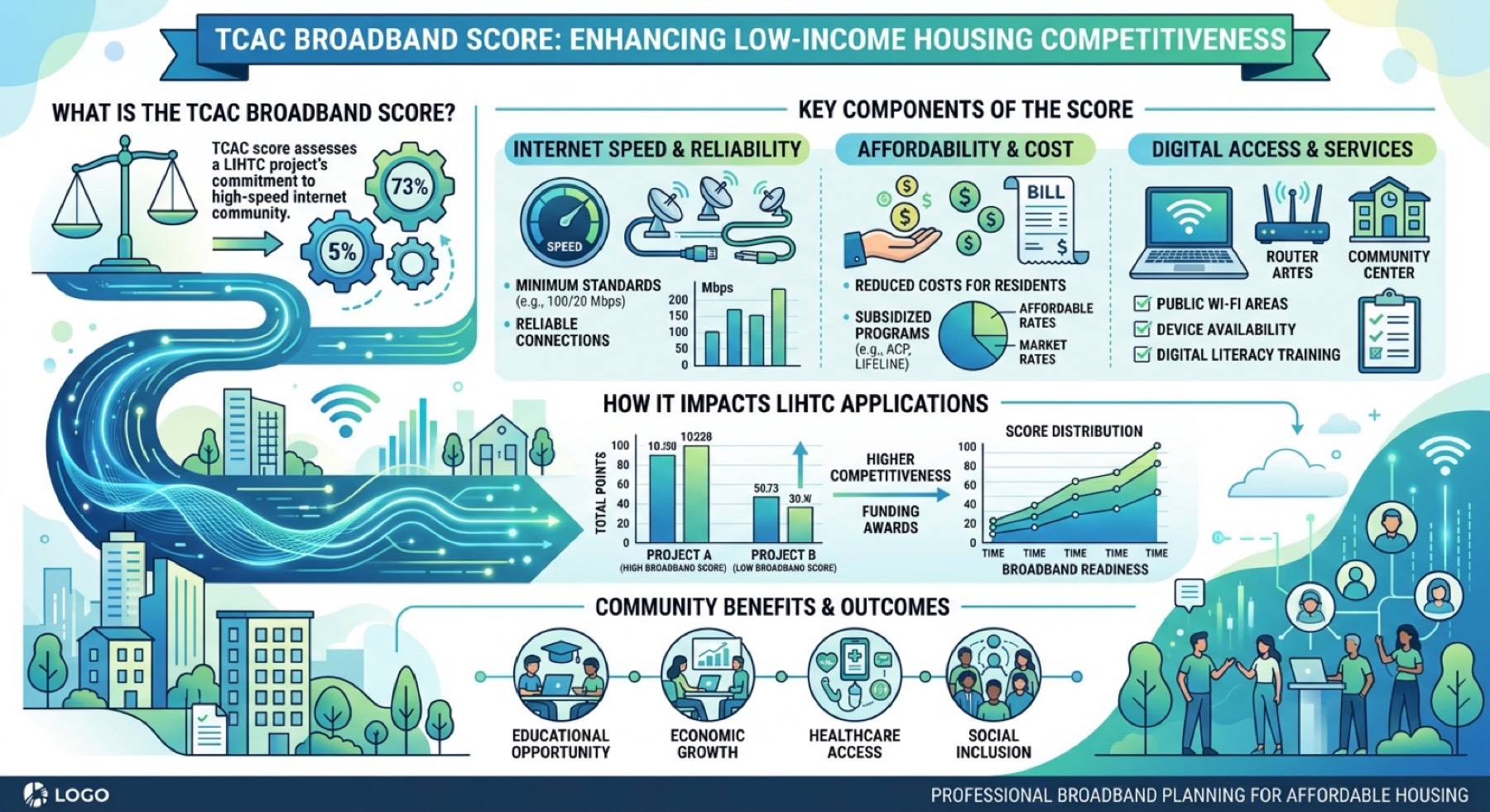
California’s Tax Credit Allocation Committee (TCAC) awards points across many categories on the 9% LIHTC application. The broadband score is one of the smaller line items, but in a competitive round it often makes the difference between a funded deal and a near-miss.
How the broadband score works
Developers earn points by committing to provide residents with broadband internet at qualifying speeds. The threshold has moved upward over time — what counted as “broadband” in earlier rounds no longer does. The latest QAP (Qualified Allocation Plan) language is the authoritative source, and developers should read it the year they apply.
What the application actually wants is documentation: a signed agreement or letter of intent from an ISP demonstrating that the building will deliver qualifying speeds to every unit at the qualifying cost, plus a hardware and infrastructure plan that supports the service.
The infrastructure side
You can promise broadband on paper, but TCAC reviewers want to see that the building physically supports it. Structured cabling design, network distribution rooms (MDF / IDF), and provisioning hardware all have to be in scope. Many architects do not specify these to the level of detail TCAC expects, which is where a technology consultant earns their fee.
Pairing the score with funding
The CASF infrastructure grant (administered by CPUC) can offset the cost of the very infrastructure that earns you the broadband points — meaning the same TCAC commitment also unlocks grant dollars. Developers who do not coordinate the two often pay twice.